Friday, November 30, 2012


Wednesday, November 21, 2012
Buy or Die! Holiday Catalog
I've created a killer catalog of my graphic novels and T-Shirts for the Holiday Shopping Season. Click on the art below to start shopping.
Happy Holidays,
Steve
Happy Holidays,
Steve

Monday, October 29, 2012
Geeks of Doom Reviews Bughouse

The cover of Bughouse #1 from 1994, which is not part of Menage a Bughouse.
A comic review site called Geeks of Doom gave my 2012 collection Menage a Bughouse a thumbs up review.
While the new book is not exactly breaking any sales records, it's certainly garnering some good press!
You can buy Menage a Bughouse here. Can't think of a better holiday gift, an entire world you can fall into for a few days for a mere $24.99!
Thursday, October 25, 2012
Self Employment & Entrepreneurial Tips
I've compiled a list of links to recent pieces I've penned on the entrepreneurial life.
Topics covered include guerrilla marketing, mobile advertising, and financing your small business.
Enjoy!
Steve Lafler

Topics covered include guerrilla marketing, mobile advertising, and financing your small business.
Enjoy!
Steve Lafler

If I can get paid to do this, then I'm doing something right!
Photo of Bill Stair and Steve Lafler by Jeff Charles
Wednesday, September 26, 2012
Self Employment and Social Security
Social Security benefits are available to owners and workers in the small-business sector. Self-employed sole proprietors are required to pay Social Security and Medicare taxes in addition to federal tax on their income. Sole proprietors file Schedule SE, Self Employment Tax as part of their annual federal tax return, paying into the Social Security and Medicare systems. Both incorporated and sole proprietor-owned small businesses use IRS form 941 for paying payroll and Social Security taxes for their employees, but in this case the Social Security tax is based on payroll amounts rather than business income.
Sole Proprietors
Sole proprietors file a Schedule C, Profit or Loss from Business along with their form 1040 each year with the IRS. Business income and expenses are reconciled on Schedule C to calculate net profit for the year. The net profit is entered on Schedule SE. The sole proprietor figures out their self employment tax using this form. This tax consists of Social Security and Medicare taxes for those who run businesses as sole proprietors.
Schedule SE
Sole Proprietors earning more than $400 annually in net earnings from their business as figured on Schedule C must file the Schedule SE. Church employees who had income of $108.28 or more must also file Schedule SE. Self employed individuals receiving social security or medicare are required to file a Schedule SE regardless of age.
Self Employment Tax Deduction
Self employed sole proprietors can deduct a portion of their self employment tax on form 1040 in calculating their adjusted gross income. The deduction is equivalent to an employer contribution to social security that regular payroll employees are entitled to. The deduction affects only income tax, not self employment earnings or tax. The self employed are also eligible to take a deduction for health insurance costs. The instructions for form 1040 and schedule SE include information on claiming this deduction.

Self Employment Tax Rate
The Self Employment Tax Rate for 2011 and 2012 is 13.3 percent, with just over ten percent of it earmarked for social security. Income earned after $106,800 is not subject to the social security tax. The rate of self employment tax is subject to acts of congress and can change.
Form 941
Small business employers use IRS form 941, Employer’s Quarterly Federal Tax Return to remit payroll taxes to the IRS. They report and pay Social Security and Medicare taxes along with federal income tax withheld.
Sole Proprietors
Sole proprietors file a Schedule C, Profit or Loss from Business along with their form 1040 each year with the IRS. Business income and expenses are reconciled on Schedule C to calculate net profit for the year. The net profit is entered on Schedule SE. The sole proprietor figures out their self employment tax using this form. This tax consists of Social Security and Medicare taxes for those who run businesses as sole proprietors.
Schedule SE
Sole Proprietors earning more than $400 annually in net earnings from their business as figured on Schedule C must file the Schedule SE. Church employees who had income of $108.28 or more must also file Schedule SE. Self employed individuals receiving social security or medicare are required to file a Schedule SE regardless of age.
Self Employment Tax Deduction
Self employed sole proprietors can deduct a portion of their self employment tax on form 1040 in calculating their adjusted gross income. The deduction is equivalent to an employer contribution to social security that regular payroll employees are entitled to. The deduction affects only income tax, not self employment earnings or tax. The self employed are also eligible to take a deduction for health insurance costs. The instructions for form 1040 and schedule SE include information on claiming this deduction.
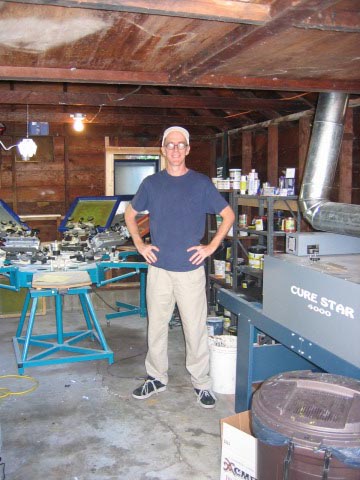
A Self Employed T-Shirt Geek
Self Employment Tax Rate
The Self Employment Tax Rate for 2011 and 2012 is 13.3 percent, with just over ten percent of it earmarked for social security. Income earned after $106,800 is not subject to the social security tax. The rate of self employment tax is subject to acts of congress and can change.
Form 941
Small business employers use IRS form 941, Employer’s Quarterly Federal Tax Return to remit payroll taxes to the IRS. They report and pay Social Security and Medicare taxes along with federal income tax withheld.

The post got some nice bounce in the comics industry news, with Heidi MacDonald giving it some play in The Beat and Tom Spurgeon providing a link on his excellent Comics Reporter site.
You can order Menage a Bughouse from the publisher here.
Thanks Jim!
Wednesday, September 19, 2012
Monster Lafler Halloween T-Shirts

It's just about my favorite time of the year--HALLOWEEN! What better time to stock up on some B-A-D monter T-shirts.!?
I'm offering shirts with Frankenjerry (Frankenstein plays Jerry Garcia's tiger guitar) and a Rockabilly Wolfman slammin' on his hollow body Gretsch. I've also been told that this particular Frankenmonster looks like Lou Reed.
Click here to hit the T-Shirt shop.

Have a terrifying Halloween!
Steve
Tuesday, September 11, 2012
How To Start a Custom T-Shirt Printing Business
This is an updated version of this article I first ran a few years back. Now, as then, I think a custom T-Shirt printing business is a great small business. Who doesn't wear T-shirts? It's a multi-billion dollar business that can be tapped into with a commitment to hard work, quality and attention to detail. Here we go:
In these times of economic uncertainty,
there are lots of unemployed people with little prospect for getting a
job, and plenty of young people starting out in similar straights. The
current economic mess is pretty rotten, but I believe it is possible to
start a successful T Shirt printing business in times like these,
because I did it myself!
When I
graduated college in 1980, we were in the midst of a deepening
recession. It was a cyclical downturn, not as bad as today, but wait! I
was living in Eugene, Oregon. The lumber industry was really in the
dumps, making the Eugene economy really dreadful. Unable to find work, I
began freelancing T Shirt jobs while searching for a more secure
position. When I sold my first shirt job, I simply got a down payment
from the client to buy the blank shirts with, and I was off and
running (lucky for me, it was an easy one color print!). Here we are 32
years and several economic downturns later. Sure I did great in the boom
times, but my T Shirt printing business always put burritos on the
table in the down cycles too.


We printed this Robot design for Sarah's Science
If you
have a garage, basement or spare room you can use, you're ready to go.
We'll look at screen printing 101 in a minute. First, I will make a
radical claim. After investing just a couple to a few hundred bucks in
basic tools and equipment, you will be ready to print your first job. I
believe a profit can be made from the get go in the Custom Screen
Printing business. I direct your attention to my blog entry, The Zero Overhead Model for a description of my business model. Be sure to take a peek also at The Win – Win Deal, a sort of philosophical underpinning to how I conduct my business relationships.
A
business is nothing but a web of relationships. I have a business
because I have healthy relationships with my clients. They talk, I
listen. Sure, you should do lots of marketing, study the various
techniques and theories, but I guarantee if you circulate and talk up
your business day in, day out, you will attract clients. Be sure to pass
out business cards left and right!
I recommend studying the book Guerrilla Marketing by Jay Conrad Levinson. He's developed a philosophy of small business marketing based on creating and maintaining good client relationships.
Here is a sampling of marketing techniques that helped me build a clientele. First, figure out who you want to print shirts for. Call them, write them, drop in and pitch them. In the spring of 1981, I approached the EMU Cultural Forum at the University of Oregon in Eugene and told them I wanted to print their T-Shirts. They sponsored concerts on campus. We hit it off, and I went on to print shirts for them for a great sting of shows including the Ramones, Frank Zappa, Iggy Pop and Willie Nelson.
Another marketing technique that works is direct mail postcards. Design a postcard announcing that you print T-Shirts. Tell the reader to call or email you (include a call to action). Create a mailing list of companies, schools, bands, bars, restaurants, etc., that you would like to print for. Mail a new bunch of cards at least four times per year.
Start a Google Adwords account. Create a short ad and select keywords to target your prospects. Choose the city or town where you want your ads to appear. Google plunks your ad into search results and on webpages. You pay only when a prospect clicks on your ad and lands on your website. You control the budget by setting cost per click and daily maximum budget.
Consider using the mobile advertising functions of Google Adwords and Facebook advertising. Mobile is growing very fast as of 2012. Half of U.S. adults have smartphones and they expect marketers to create interesting advertising experiences in the mobile environment.
Now let's dig into the screen printing overview. Whether you are an out of work fancy pants graphic designer or a DIY punk rocker, one of the best small scale entrepreneurial businesses to start is a T-Shirt printing business. The initial investment can be modest, and a profit can be realized quickly with proper care to details. A screen print on a T-Shirt looks great – screen printing ink is bright and dynamic. I'll mention ink jet printing and digital imaging later, but the thrust of this piece is screen printing (a.k.a. Silkscreen).
Here is a list of materials you will need for your first project: Wood (or metal) frame stretched with screen mesh, piece of foam rubber to fit inside frame for exposure process, screen printing ink (Union water base in is good to start with, or Speedball brand can be found in some art supply stores), squeegee, light sensitive emulsion, Light source (a halide work light is good), glass 1/4" thick, weights to hold the glass down on the frame, and your design on transparency or film positive (the design should be positive, not negative on the transparency). Oh, and T Shirts to print on.

A well stocked art supply store can sell you all the basic screen print materials listed above. It is recommended to comparison shop, as the prices may vary dramatically. Also check with your local industrial screen print supplier (under “screen printing/supplies” in the yellow pages or online). If you are serious about setting up a shop, you want to buy from an industrial supplier like Midwest Sign and Screen.
Here are the steps to produce your first screen print project. Clean your stretched frame with mild soap, rinse and let dry for at least an hour. Coat the screen with light sensitive emulsion (check instructions for mixing sensitizer into emulsion). Coat both sides then scrape away excess emulsion. Let dry overnight. If you didn't buy a pre-stretched screen, you will need to put your screen fabric on the wooden frame, so taut that you can bounce a coin on it. You can use a staple gun, but take care not to rip the screen mesh with the staples.
Put your art/design on a transparency. Print the design on vellum or other heavy transparent paper on a laser printer. Inkjet printers often do not create an opaque enough image for burning a screen. Warning: Some laser printers are too hot, and will melt vellum!!! I successfully used a HP laserjet for years to create transparencies. It was necessary to use the HP brand cartridges; the generic/refilled ones did not make a dark enough film to successfully burn a screen. You can also send your graphic file to a film output service bureau for your film positive.
Burning the screen: SEE DIAGRAM three paragraphs back. You need to do this step in the dark. I used Ulano Fotocoat TZ, an emulsion you can use in low light. Check the instructions for your emulsion. Put your foam rubber on the floor or a table. Put your coated screen frame over it on the inside side of the frame (leaving the flat side of the frame pointing up). Put your transparency upside down on top of the screen. Put your piece of glass over the transparency, and weight it at the edges with books or some other heavy objects. If you have ink cans, they will do fine because they are heavy. Hang your light source about 18” above your screen and turn on for recommended exposure time. Develop with warm water. Spray the screen until the image area is free of emulsion. If your screen doesn't develop, use more water pressure. Blot both sides with newspaper when done developing, to remove excess emulsion. If your emulsion comes off too easily, ruining your image, increase your exposure time. For years I used a tanning bulb to burn screens, it had the power necessary to burn a fine screen, including halftone dots! Later I used two halide work lights, those suckers are pretty hot so use caution!
I recommend studying the book Guerrilla Marketing by Jay Conrad Levinson. He's developed a philosophy of small business marketing based on creating and maintaining good client relationships.
Here is a sampling of marketing techniques that helped me build a clientele. First, figure out who you want to print shirts for. Call them, write them, drop in and pitch them. In the spring of 1981, I approached the EMU Cultural Forum at the University of Oregon in Eugene and told them I wanted to print their T-Shirts. They sponsored concerts on campus. We hit it off, and I went on to print shirts for them for a great sting of shows including the Ramones, Frank Zappa, Iggy Pop and Willie Nelson.
Another marketing technique that works is direct mail postcards. Design a postcard announcing that you print T-Shirts. Tell the reader to call or email you (include a call to action). Create a mailing list of companies, schools, bands, bars, restaurants, etc., that you would like to print for. Mail a new bunch of cards at least four times per year.
Start a Google Adwords account. Create a short ad and select keywords to target your prospects. Choose the city or town where you want your ads to appear. Google plunks your ad into search results and on webpages. You pay only when a prospect clicks on your ad and lands on your website. You control the budget by setting cost per click and daily maximum budget.
Consider using the mobile advertising functions of Google Adwords and Facebook advertising. Mobile is growing very fast as of 2012. Half of U.S. adults have smartphones and they expect marketers to create interesting advertising experiences in the mobile environment.
Now let's dig into the screen printing overview. Whether you are an out of work fancy pants graphic designer or a DIY punk rocker, one of the best small scale entrepreneurial businesses to start is a T-Shirt printing business. The initial investment can be modest, and a profit can be realized quickly with proper care to details. A screen print on a T-Shirt looks great – screen printing ink is bright and dynamic. I'll mention ink jet printing and digital imaging later, but the thrust of this piece is screen printing (a.k.a. Silkscreen).
Here is a list of materials you will need for your first project: Wood (or metal) frame stretched with screen mesh, piece of foam rubber to fit inside frame for exposure process, screen printing ink (Union water base in is good to start with, or Speedball brand can be found in some art supply stores), squeegee, light sensitive emulsion, Light source (a halide work light is good), glass 1/4" thick, weights to hold the glass down on the frame, and your design on transparency or film positive (the design should be positive, not negative on the transparency). Oh, and T Shirts to print on.

A well stocked art supply store can sell you all the basic screen print materials listed above. It is recommended to comparison shop, as the prices may vary dramatically. Also check with your local industrial screen print supplier (under “screen printing/supplies” in the yellow pages or online). If you are serious about setting up a shop, you want to buy from an industrial supplier like Midwest Sign and Screen.
Here are the steps to produce your first screen print project. Clean your stretched frame with mild soap, rinse and let dry for at least an hour. Coat the screen with light sensitive emulsion (check instructions for mixing sensitizer into emulsion). Coat both sides then scrape away excess emulsion. Let dry overnight. If you didn't buy a pre-stretched screen, you will need to put your screen fabric on the wooden frame, so taut that you can bounce a coin on it. You can use a staple gun, but take care not to rip the screen mesh with the staples.
Put your art/design on a transparency. Print the design on vellum or other heavy transparent paper on a laser printer. Inkjet printers often do not create an opaque enough image for burning a screen. Warning: Some laser printers are too hot, and will melt vellum!!! I successfully used a HP laserjet for years to create transparencies. It was necessary to use the HP brand cartridges; the generic/refilled ones did not make a dark enough film to successfully burn a screen. You can also send your graphic file to a film output service bureau for your film positive.
Burning the screen: SEE DIAGRAM three paragraphs back. You need to do this step in the dark. I used Ulano Fotocoat TZ, an emulsion you can use in low light. Check the instructions for your emulsion. Put your foam rubber on the floor or a table. Put your coated screen frame over it on the inside side of the frame (leaving the flat side of the frame pointing up). Put your transparency upside down on top of the screen. Put your piece of glass over the transparency, and weight it at the edges with books or some other heavy objects. If you have ink cans, they will do fine because they are heavy. Hang your light source about 18” above your screen and turn on for recommended exposure time. Develop with warm water. Spray the screen until the image area is free of emulsion. If your screen doesn't develop, use more water pressure. Blot both sides with newspaper when done developing, to remove excess emulsion. If your emulsion comes off too easily, ruining your image, increase your exposure time. For years I used a tanning bulb to burn screens, it had the power necessary to burn a fine screen, including halftone dots! Later I used two halide work lights, those suckers are pretty hot so use caution!
Let
the screen dry. Put over T Shirt and add ink to one side of the screen,
creating an “ink reservoir”. Holding the screen frame down firmly, pull
2 – 3 strokes and lift to check your print. Clean screen immediately
when finished. You can do multiple prints. If your print smudges, try a
finer screen mesh. If insufficient ink gets on the T Shirt, use thinner
ink or a more open screen mesh. I used to print one color jobs in my
dorm room with no press, just the screen frame and a squeegee, it kept
me in beer money and date money when I was an undergraduate.
A
word about inks, for years I used a homemade press and waterbase inks
(Union brand is good). Most commercial T Shirts are printed with
plastisol, a plastic base ink. You will need a dryer to cure plastisol. I
recommend an entry level spot dryer, it maybe runs 5 – 600 bucks. Shop
around. I was in the biz for a decade before I got one! If your business
takes off, you will eventually want a spot dryer and a conveyor dryer.
Injets
and digital technology. Yes, you can print backwards on “T shirt
transfer paper” with an inkjet printer and iron the design on a shirt.
It's a cool way to go for short run, full color. Also, there are now
machines from that
do digital imaging direct on shirts. They are great machines but start
at 15K or so, we are talking serious capital. Sure, I want one, but it
just ain't in the cards for me at present. By contrast, my 6 color, 6
station Workhorse manual printer was a marvel, and it cost only $3600.00
brand new. Paid for itself in a couple months, and it's still running
today 13 years later in my buddy David's shop.
This next diagram is for a home made three color T-Shir press. It's made from 3/4" plywood, masonite, screws, nails, sawhorses, and screen
frame clamps. It's funky, but you can print tight register three color
jobs on this rig with practice. You may want to sell only 1 color jobs
until your level of craft improves, and you can confidently handle multi-color work.


So let's build a
press—start with a 4' X 4' piece of 3/4” thick plywood. Cut the
shirtboard area away with a jigsaw. This is a lot of jigsawing, start
with a fresh blade. The channels should be 2.5 – 3”. The indents at the
back of the shirt board are for the material at the bottom of the T
Shirt to to fall as to not interfere with the print. Round
the corners at the front of the shirt board so as not to catch the
shirts as you load them onto the press. Run a 3' long piece of 2” X 2”
under the shirt board /press table for support. Bevel the front of the
support board, cutting it at a 45 degree angle so it doesn't catch shirts as you load them on the
press.
Top the shirt board area with a
piece of 1/4” masonite or pressed board to create a smooth printing surface. Nail down
with brads at the edges, out of the live print area. Buy 3 sets of
screen clamps from a screen print supply house and mount them on 1/4”
masonite too, so they are at the same level as the shirt board area.
With this homemade press, you will be making your own screen frames to
fit the peculiar size of the press. Painting stretcher bars work pretty
good, or just buy 1” x 2” or 2” x 2” wood to make your frames.
There are many fine rotary manual presses for T Shirt printing available, both new and used. I recommend searching for used presses, dryers, shirts and
equipment. Ask to test/demo any used press or dryer before buying! Inspect it carefully for functionality and wear. Workhorse is a good brand for new manual presses. Ranar has decent conveyor dryers at a good price. Remember too, all the suppliers want to sell you as much stuff as they
can. It's fun to get all the latest gear and equipment, but experience
tells me that a profitable shop buys only what it needs to produce the
work it has.
A note about pricing
jobs. I started out as a hungry student who needed to learn how to make a
decent print, so naturally I came in at the low end of the price scale
in the shirt biz. Once I got the quality thing down, I charged a higher
than average fee. There is always a market for quality. Most buyers are
looking to push your price down, especially after years of low cost
Walmart stuff from China!
Don't work
cheap, it will just piss you off. Talk to people in the field to see
what the going rates are. A screen printing press should generate at the
very least $60 per production hour for a small scale shop, $100
is do-able per press per production hour in an experienced small shop. If you can put together 10 - 20 production hours per week
you will be fine. There are lots of other business tasks to eat up the
rest of your time, believe me.
Good Luck! Remember that it will take some time to build a client base, so work hard, be patient, and maybe keep a part time job in your back pocket while you build your shop.
Steve Lafler
Manx Media Custom Screen Printing
503-213-3671
We want to quote on your custom screen printing job. Email Steve with your job specs for a price.
Copyright 2012
Wednesday, September 05, 2012
What the Heck is the Hypernet? Who Are These Dudes?
I just ran across something called Roger and Mike's Hypernet blog. These guys posit that the internet is so, like, last week's news. Now, it's all about the "hypernet", the version of the web where all those mobile units like smartphones and tablets go to play.

And they're right. I've been writing a bunch of articles recently about mobile advertising and marketing for a well-known SEO content mill. I can tell you that there are more cell phones in the U.S. than people. And, the estimates for the number of smartphones runs about half of all adults, depending on who's survey you believe. Tablets are multiplying like rabbits too!
It started for me yesterday when I saw Roger on a Bloomberg video interview, imploring us to forget about Google and Microsoft, as they are being made irrelevant by the onward (very quick) march of mobile technology.
Old Roger was very jolly indeed, as he quipped, "we're all making tools now, not websites". Yup, he's talking about mobile apps.
Me, I'm playing catchup -- I have yet to purchase a smartphone! However, I have embraced the mobile advertising options available to me. I use both Google Adwords and Facebook advertising to promote my custom screen printing business. These cost effective targeted advertising services reach mobile users as well as web searchers. And yes, mobile advertising is growing faster than web search based advertising.
Steve Lafler
Manx Media Custom T-Shirt Printing
Call or email for a quote on your wholesale T-Shirt job.
503-213-3671
Roger McNamee and Mike Maples
And they're right. I've been writing a bunch of articles recently about mobile advertising and marketing for a well-known SEO content mill. I can tell you that there are more cell phones in the U.S. than people. And, the estimates for the number of smartphones runs about half of all adults, depending on who's survey you believe. Tablets are multiplying like rabbits too!
It started for me yesterday when I saw Roger on a Bloomberg video interview, imploring us to forget about Google and Microsoft, as they are being made irrelevant by the onward (very quick) march of mobile technology.
Old Roger was very jolly indeed, as he quipped, "we're all making tools now, not websites". Yup, he's talking about mobile apps.
Me, I'm playing catchup -- I have yet to purchase a smartphone! However, I have embraced the mobile advertising options available to me. I use both Google Adwords and Facebook advertising to promote my custom screen printing business. These cost effective targeted advertising services reach mobile users as well as web searchers. And yes, mobile advertising is growing faster than web search based advertising.
Steve Lafler
Manx Media Custom T-Shirt Printing
Call or email for a quote on your wholesale T-Shirt job.
503-213-3671
Tuesday, September 04, 2012
Mobile Marketing for T-Shirt Printers
There are now more mobile phones than people in the United States, with Smartphones in the hands of more than 50% of mobile users. I've been looking at articles from the NY Times, Forbes and Inc, and they all report that mobile advertising and marketing is growing, uh, wicked fast.
I'm no expert on mobile marketing, but clearly it's time for custom T-Shirt printers (hey, that's me!) to add mobile to our marketing mix.
How are we gonna do that? Well, I'll take the easy way out and refer readers to some slick guys in Australia, Oz Promo TShirts, who've put in the work and have posted a darn good article about Mobile Marketing for Custom T-Shirt Printers. I note that most of their comments apply to small business as a whole.
Turns out we're shifting to making tools now (apps), not websites, to aid our marketing efforts.
I'm no expert on mobile marketing, but clearly it's time for custom T-Shirt printers (hey, that's me!) to add mobile to our marketing mix.
How are we gonna do that? Well, I'll take the easy way out and refer readers to some slick guys in Australia, Oz Promo TShirts, who've put in the work and have posted a darn good article about Mobile Marketing for Custom T-Shirt Printers. I note that most of their comments apply to small business as a whole.
Turns out we're shifting to making tools now (apps), not websites, to aid our marketing efforts.
Friday, August 10, 2012
Custom T-Shirt Marketing Tip
And really, this applies to any small business. I just happen to be in the custom T-Shirt business.
Your success depends entirely on your relationships with current and potential clients, and how you dialog with them.
Sometimes in thinking of marketing, I see it as an abstract problem of putting out a blast of information through three or four marketing channels to garner enough business.
I tend to forget, unless I am talking to someone about printing their custom T-Shirt order, I'm not doing business!
Steve
Your success depends entirely on your relationships with current and potential clients, and how you dialog with them.
Sometimes in thinking of marketing, I see it as an abstract problem of putting out a blast of information through three or four marketing channels to garner enough business.
I tend to forget, unless I am talking to someone about printing their custom T-Shirt order, I'm not doing business!
Steve
The Comic Bastards gave my new book Menage a Bughouse a rave review!
You can buy Menage a Bughouse from the publisher here. It won't be going through the Diamond distribution system, so please consider buying it direct.
Steve

You can buy Menage a Bughouse from the publisher here. It won't be going through the Diamond distribution system, so please consider buying it direct.
Steve

Tuesday, July 10, 2012
Complete Bughouse Tour Dates
Here is a complete list of my tour dates for this summer. I'm hitting the road with Menage A Bughouse, the 408-page book collecting my trilogy of Bughouse graphic novels. The tour starts tomorrow in Providence, Rhode Island at ADA Books.

Tour
Dates
July
11, Ada Books, Providence, RI, 7 pm
July
13, Bergen Street Comics, Brooklyn, NY, 7 pm
July
14, Locust Moon Comics, Philadelphia, PA, 8 pm
July
17, Boxcar Books, Bloomington IN, 7 pm
July
18, Daydream Comics, Iowa City, IA, 5 pm
July
21, Time Warp Comics, Boulder, CO, 2 pm
July
25, Cartoon Art Museum, San Francisco, CA, 7 pm
July
28, Cosmic Monkey Comics, Portland, OR, 2 pm
Zip me an email if you'd like more information.
Steve Lafler
Monday, July 09, 2012
Bughouse at Brooklyn's Bergen St. Comics Friday the 13th
Cartoonist
Steve Lafler teams up with publisher CO2 to release Ménage
a
Bughouse.
a 408-page volume collecting Lafler's trilogy of Bughouse
graphic novels, Bughouse,
Baja
and Scalawag.

Lafler
will be touring the U.S. during July to promote Ménage
a
Bughouse.
The Bughouse tour comes to Bergen Street Comics in Brooklyn, NY at 7
p.m. on July 13, with a panel discussion of Lafler's new book. The
panel will feature rising art-comics star Austin English and CO2
publisher Gerry Giovinco.
Bughouse
is the story of Jimmy Watts and his band of jazz playing bugs. The
character driven story is set in a stylish “insect-noir” world,
invoking an indigo-toned Manhattan of the early 1950s. Be-bop is
king, and the alluring substance “bug juice” threatens to destroy
the players against a backdrop of romance and intrigue.
Ménage
a
Bughouse retails
for $24.99. A hardback edition will be available for $39.99. The
large format book (8.5 x 11) showcases Lafler's fluid brushwork.

“Steve
Lafler is a master cartoonist and his work is in a class by itself;
an unpredictable amalgam of fun, intelligence, breeziness and
glorious strangeness that keeps your eyes fed and your synapses
sizzling.” --Jim Woodring
Bergen
Street Comics, 470 Bergen Street, Brooklyn, NY 11217 (718) 230-5600
July
13, 7:00 p.m.
Further info from Steve Lafler
Thursday, July 05, 2012
Steve Lafler at MoCCA July 12
The Steve Lafler event at MoCCA has been cancelled. As of Friday July 6th, I am scrambling to come up with an alternate venue in NYC or Brooklyn.

Lafler will be touring the U.S. during July to promote Ménage a Bughouse.


Ménage a Bughouse retails for $24.99. A hardback edition will be available for $39.99. The large format book (8.5 x 11) showcases Lafler's fluid brushwork.


Cartoonist
Steve Lafler teams up with publisher CO2 to release Ménage
a
Bughouse.
a 408-page volume collecting his trilogy of Bughouse
graphic novels.
Lafler will be touring the U.S. during July to promote Ménage a Bughouse.

Bughouse original art and Radio Insecto CDs will be among the offerings at Lafler's MoCCA stop.

Bughouse
is the story of Jimmy Watts and his band of jazz playing bugs. The
character driven story is set in a stylish “insect-noir” world,
invoking an indigo-toned Manhattan of the early 1950s. Be-bop is
king, and the alluring substance “bug juice” threatens to destroy
the players against a backdrop of romance and intrigue.
Ménage a Bughouse retails for $24.99. A hardback edition will be available for $39.99. The large format book (8.5 x 11) showcases Lafler's fluid brushwork.
“Steve
Lafler is a master cartoonist and his work is in a class by itself;
an unpredictable amalgam of fun, intelligence, breeziness and
glorious strangeness that keeps your eyes fed and your synapses
sizzling.” --Jim Woodring
Tour
Dates
July
11, Ada Books, Providence, RI
July
12, MoCCA, New York City
July
14, Locust Moon Comics, Philadelphia, PA
July
17, Boxcar Books, Bloomington IN
July
18, Daydream Comics, Iowa City, IA
July
21, Time Warp Comics, Boulder, CO
July
25, Cartoon Art Museum, San Francisco, CA
July
28, Cosmic Monkey Comics, Portland, OR

Photo of Steve Lafler by Jeff Charles

Menage a Bughouse cover
Call (or email) Steve for further information at 503-213-3671.
Tuesday, July 03, 2012
Ménage à Bughouse Official Roll Out
CO2 has formally announced the publication of Ménage à BUGHOUSE, the 408-page collection of all my insect-jazz comics.
The book is a print-on-demand item--it will not be sold via the traditional book distribution system. The paperback edition is available here for $24.99, and the hardcover edition is available for $39.99.

As an artist, the publication of this volume is a dream realized. It takes the body of work at the center of my life and puts it all on one gorgeous place. Kudos, and big thanks, to Gerry Giovinco and Bill Cucinotta of CO2 for helping me bring this book into existence.
The work in Ménage à Bughouse has previously been published as a trilogy of graphic novels from indie comix publisher Top Shelf Productions. I love the Top Shelf series, each book is a complete jewel that stands on it's own. But you can't knock having all the Bughouse material in one book, and the real bonus here is the larger format--it really features my brushwork to advantage.
I've been blabbing about the new book for a month already, and the fact that I'm going to tour the U.S. this month (July, 2012) to promote it. So, I'm going to put a little something extra in this post. Here, I'm reproducing the foreword to Ménage à Bughouse, a pertinent bit of comics history explaining where the heck this book comes from:

The book is a print-on-demand item--it will not be sold via the traditional book distribution system. The paperback edition is available here for $24.99, and the hardcover edition is available for $39.99.

As an artist, the publication of this volume is a dream realized. It takes the body of work at the center of my life and puts it all on one gorgeous place. Kudos, and big thanks, to Gerry Giovinco and Bill Cucinotta of CO2 for helping me bring this book into existence.
The work in Ménage à Bughouse has previously been published as a trilogy of graphic novels from indie comix publisher Top Shelf Productions. I love the Top Shelf series, each book is a complete jewel that stands on it's own. But you can't knock having all the Bughouse material in one book, and the real bonus here is the larger format--it really features my brushwork to advantage.
I've been blabbing about the new book for a month already, and the fact that I'm going to tour the U.S. this month (July, 2012) to promote it. So, I'm going to put a little something extra in this post. Here, I'm reproducing the foreword to Ménage à Bughouse, a pertinent bit of comics history explaining where the heck this book comes from:
The
Coming of Bughouse
I was
a bit feverish one October Monday some years back, so I called in
sick to my part-time graphics job. Immersed in a wobbly,
none-too-comfortable mode, I still found myself possessed of a
playful curiosity. Picking up my pencil and a fresh piece of bristol
paper, I determined to make one decent drawing before the day was
out.
For
inspiration, I pulled on some half-baked notions that had been piling
up in my mind's eye. About six months prior, I'd read the shocking
and lively autobiography of Miles Davis, the jazz trumpet giant of
the 20th
century. Miles was a supreme ranconteur, spinning his narrative
around the creative leaps of Charlie Parker, Dizzy Gillespie and many
others as well as himself. He was the brilliant bad boy at the center
of cutting-edge jazz, getting into hair-raising scrapes as a matter
of course.
It was
more than synchronicity that David Croenenberg's film adaptation of
William Burrough's Naked
Lunch appeared about the
same time. Croenenberg's film was a brilliant translation of the
ethos of Burroughs' work to film, underscored by a sublime Ornette
Coleman soundtrack. Actor Peter Weller hit just the right note as
Bill Lee, the stand in for Burroughs—dead pan hilarious and
desperate at once, all the while embracing his dark destiny.
My
fascination with the post-war NYC world that served as a back-drop to
the Be-Bop and Beat movements dovetailed perfectly with the mood I
wanted to capture in my “one decent drawing” that day. I was
pregnant with intent to create a story set in that milleau.
The
intent gathered strength and spilled over into the physical world. I
quickly sketched a tight little drawing of an insect saxophone player
in a pin-stripe suit. I inked the drawing and had my first image of
Jimmy Watts—the strutting saxophone genius, capable of explosive
innovations at the drop of a hat, yet crippled by addiction to a
substance known as “Bug Juice.”
Bughouse
burrows into the spirit of the artist, the innovator, the improvisor.
I put the nature of creativity itself under the microscope, while at
the same time I scrutinized the dynamics of addiction. Why are so
many great artists and musicians hopeless addicts? Are they simply
escaping pain, or do they seek the key to “the other”, the secret
font of knowledge, to put it to work in the service of art? I came to
understand that addicts are very good at fooling people, but their
supreme skill is self-delusion.
I dove
into Bughouse
head first, and was rewarded beyond my wildest dreams. I sought to
give a unique voice and perspective to each character, driving the
narrative forward by writing dialog that illuminated character. The
muse showed up, encouraged by my drive and focus, and happily handed
Bughouse
over to me.
The
first nine-page Bughouse
story appeared in Buzzard,
the
underground comics anthology, in the spring of 1993. At the time, I
was excited at the prospect of creating enough material to publish a
full 32-page comic book of Bughouse.
I
would have been flabbergasted, and actually ecstatic, to know that
the series would extend to six comic books, one graphic novel and one
graphic novella on my own Cat-Head imprint, and a trilogy of graphic
novels from Top Shelf Productions.
Now,
the entire work is here in your hands, inviting you to embark on a
singular adventure to the insect-noir, indigo-tinged world of
Bughouse.
Steve
Lafler
Oaxaca,
Mexico
Spring
2012
-----------------------------------------------------------------------------------------
Back here in real time, it's July 3, I'm starting my tour in 8 days. If I don't see you out there on the road, I hope you'll consider ordering Menage a Bughouse!

Photo of Steve Lafler by Jeff Charles
CO2 Publishes Three New Books, including Bughouse
Captain Obese, Heaven and the Dead City and my own Menage a Bughouse are all available from the CO2 store right here. Each book is available in both paperback and hardcover.
Congratulations to my Gerry Giovinco and Bill Cucinotta, my publishers at CO2, on getting these 3 great books out!

That's Jorge and Felix from the Bughouse book, gettin' down. Acrylic sketch by Steve Lafler
Congratulations to my Gerry Giovinco and Bill Cucinotta, my publishers at CO2, on getting these 3 great books out!

That's Jorge and Felix from the Bughouse book, gettin' down. Acrylic sketch by Steve Lafler
Saturday, June 30, 2012
Wes Anderson's Moonrise Kingdom
This is the best movie I've seen in awhile. Granted, not everyone is a fan of director Wes Anderson, but I am.
Anderson's blunt deadpan humor is on display in Moonrise Kingdom, the story of a pair of 12-year old would-be summer lovers on an island off the coast of Maine. A wayward scout and a moody adolescent girl, played by Jared Gilman and Kara Hayward, abscond to the woods. It's a timeless love story full of humor, but as usual with Anderson, there is an undercurrent of potential mayhem and dread.

Here's what knocks me out: It's the way the director presents the narrative. Each shot is carefully constructed with characters and props placed in the most deliberate manner within the rectangle of the screen. The movie is visually rich with details such as era appropriate costumes (1965). As a cartoonist, I really respond to this! The overall feel is that of a DC comic of the era, straightforward narrative with no waste.

Anderson's blunt deadpan humor is on display in Moonrise Kingdom, the story of a pair of 12-year old would-be summer lovers on an island off the coast of Maine. A wayward scout and a moody adolescent girl, played by Jared Gilman and Kara Hayward, abscond to the woods. It's a timeless love story full of humor, but as usual with Anderson, there is an undercurrent of potential mayhem and dread.

Here's what knocks me out: It's the way the director presents the narrative. Each shot is carefully constructed with characters and props placed in the most deliberate manner within the rectangle of the screen. The movie is visually rich with details such as era appropriate costumes (1965). As a cartoonist, I really respond to this! The overall feel is that of a DC comic of the era, straightforward narrative with no waste.

Tuesday, June 26, 2012
New Bughouse T-Shirt

The image above prints full color on a cotton ringer T (white T, navy trim) for $18.49.
Dreams of the Fox Mini-Bike
When I was 12 years old, I somehow convinced my parents to get me a mini-bike. I'd saved a few bux and they put up the rest.

What is a mini-bike? Basically, you have a few feet of steel tube bent into a smallish bike frame. Bolt a couple 10-12" tires on, throw a lawn mower engine under a foam rubber seat, and you're off!
Mine was a Fox Sprite with a Tecumseh 3-horsepower lawnmower engine. The same frame as the one pictured here, only with a smaller engine and tires.
I could barely fold my lanky frame over this thing, but spent a couple years zipping around the woods, parks and farmlands adjacent to my neighborhood, situated near the border of Longmeadow and East Longmeadow, in western Massachusetts.
Come fall with its wind, cold and mud, come the full-on dusty dog days of baking-hot August, you'd find me blasting full-throttle over the bumpy baseball field of Turner Park, or through the undulating dirt fire roads of nearby Wolf Swamp neighborhood.
Really, the only things that could compete for my attention were A) Spider-Man comics drawn by John Romita, and B) a plucky girl named Cathy who lived a couple blocks away. Homework? What's that?!
More than a bit dangerous, I was lucky to get only a few scrapes in falls from the bike. Helmet? Who wore helmets on mini-bikes in 1969? I had an insane amount of fun and learned how to take an engine apaprt (if not put it back together!).
Steve Lafler
Manx Media custom screen printing

What is a mini-bike? Basically, you have a few feet of steel tube bent into a smallish bike frame. Bolt a couple 10-12" tires on, throw a lawn mower engine under a foam rubber seat, and you're off!
Mine was a Fox Sprite with a Tecumseh 3-horsepower lawnmower engine. The same frame as the one pictured here, only with a smaller engine and tires.
I could barely fold my lanky frame over this thing, but spent a couple years zipping around the woods, parks and farmlands adjacent to my neighborhood, situated near the border of Longmeadow and East Longmeadow, in western Massachusetts.
Come fall with its wind, cold and mud, come the full-on dusty dog days of baking-hot August, you'd find me blasting full-throttle over the bumpy baseball field of Turner Park, or through the undulating dirt fire roads of nearby Wolf Swamp neighborhood.
Really, the only things that could compete for my attention were A) Spider-Man comics drawn by John Romita, and B) a plucky girl named Cathy who lived a couple blocks away. Homework? What's that?!
More than a bit dangerous, I was lucky to get only a few scrapes in falls from the bike. Helmet? Who wore helmets on mini-bikes in 1969? I had an insane amount of fun and learned how to take an engine apaprt (if not put it back together!).
Steve Lafler
Manx Media custom screen printing
Subscribe to:
Posts (Atom)