Showing posts with label self employment. Show all posts

Wednesday, September 26, 2012

Self Employment and Social Security

Social Security benefits are available to owners and workers in the small-business sector. Self-employed sole proprietors are required to pay Social Security and Medicare taxes in addition to federal tax on their income. Sole proprietors file Schedule SE, Self Employment Tax as part of their annual federal tax return, paying into the Social Security and Medicare systems. Both incorporated and sole proprietor-owned small businesses use IRS form 941 for paying payroll and Social Security taxes for their employees, but in this case the Social Security tax is based on payroll amounts rather than business income.

Sole Proprietors

Sole proprietors file a Schedule C, Profit or Loss from Business along with their form 1040 each year with the IRS. Business income and expenses are reconciled on Schedule C to calculate net profit for the year. The net profit is entered on Schedule SE. The sole proprietor figures out their self employment tax using this form. This tax consists of Social Security and Medicare taxes for those who run businesses as sole proprietors.

Schedule SE

Sole Proprietors earning more than $400 annually in net earnings from their business as figured on Schedule C must file the Schedule SE. Church employees who had income of $108.28 or more must also file Schedule SE. Self employed individuals receiving social security or medicare are required to file a Schedule SE regardless of age.

Self Employment Tax Deduction

Self employed sole proprietors can deduct a portion of their self employment tax on form 1040 in calculating their adjusted gross income. The deduction is equivalent to an employer contribution to social security that regular payroll employees are entitled to. The deduction affects only income tax, not self employment earnings or tax. The self employed are also eligible to take a deduction for health insurance costs. The instructions for form 1040 and schedule SE include information on claiming this deduction.


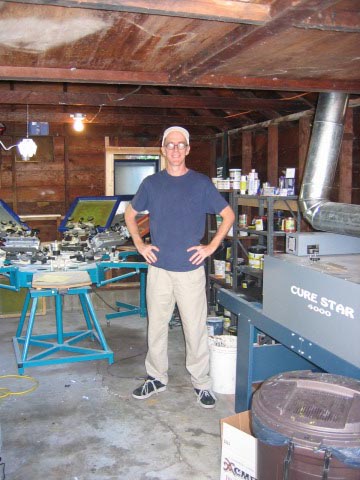
A Self Employed T-Shirt Geek

Self Employment Tax Rate

The Self Employment Tax Rate for 2011 and 2012 is 13.3 percent, with just over ten percent of it earmarked for social security. Income earned after $106,800 is not subject to the social security tax. The rate of self employment tax is subject to acts of congress and can change.

Form 941

Small business employers use IRS form 941, Employer’s Quarterly Federal Tax Return to remit payroll taxes to the IRS. They report and pay Social Security and Medicare taxes along with federal income tax withheld.

Tuesday, September 29, 2009

Self Employment For Bohemians: The Book


I've compiled a collection of the most pertinent and pithy entries on this blog and published it as a book. Part entrepreneurial primer and part swashbuckling memoir with lots of hilarious anecdotes, Self Employment For Bohemians is available for $12.00 plus shipping.
The book offers a lot of nut & bolts advice for freelancers, wound up with tales of my adventures in cartooning, publishing and running a wholesale custom T Shirt shop.
Just like the header on this blog says, if having a regular 9 to 5 job is your idea of a living death, this is the book for you!

Saturday, December 27, 2008

Marketing for the Self Employed (an update)

Make the Phone Ring

Okay, you work for yourself providing a product or service. You need the phone to ring. You need queries about your product or service in your email in box. You need a clientèle.

Cover your Bets.
I started the Oakland, California version of my T-Shirt printing service in the spring of ’87. For seven out of the next ten years, I maintained a part time job to insure that I could make ends meet. It took time to build a clientèle that could support me. Chances are, you are jumping into self employment with minimal capitalization, so it’s incumbent upon you to insure some level of income.

Marketing plans & scams
It has been my experience that intuition supplies one with plenty of ideas about how to attract potential customers. When I started freelancing t-shirt printing as an undergraduate, I simply copied up fliers (a.k.a handbills) a couple hundred at a time and papered the bulletin boards of the University of Massachusetts campus with them (and the phone poles, and just about any other surface I could drive a staple into). It was cheap and it worked. I lived for years off of my staple gun. I mean staple guns; actually wore a few out. I took care to design fliers that communicated my message in clear simple terms, including the command “Call Steve for a quote”.

A few years back I gave up the fliers method for a couple reasons. First, there were fewer places to hang fliers. As fliers became a more popular marketing technique, they caused more trash everywhere. Cities, universities and what not became smart about eliminating places where lots of messy handbills could be posted. When I started the biz in Oakland in the spring of ’87, I was the only screen printer posting fliers on the UC Berkeley campus. It brought me a ton of business from dorms, frats, clubs, sororities and the like. Within a year, five or six screen printers started a literal wall papering of campus with fliers like mine. I had to hang twice as many to get half the jobs, and it became a low ball market. Who wants to work cheap? Not me! I’ll also mention that it had become a pain in the ass to truck all over town hanging handbills. It just ain’t that much fun. Occasionally, someone would give me a hard time for trashing up their neighborhood, and who can blame them?

From the very start, I also used what has been my number one selling tool, direct mail postcards. Again, I’ve always taken care to craft a postcard that delivers a clear message: “I do high quality custom T printing at reasonable rates, call me up right now for a quote” was the gist of it. I have usually generated my own mailing lists from local weekly newspapers (go after the advertisers and event listers), the local “business to business” yellow pages, the regular yellow pages, and directories from this industry or that. Collect addresses of companies or organizations who you would like to do business with. I’ve also bought mailing lists from data base compilers… my experience is that these lists don’t produce calls or email queries as well as lists you produce yourself.

Therefore I recommend crafting a postcard that hammers you message home, creating a mailing list and sending those suckers out. Wait two or three weeks and mail it again. Do another version of the card and mail that to the same list a few times. Advertising is a process, not an event. You have to repeat it. Keep your message consistent and it will sink in.

You can target lists at specific industries or categories. You can offer special prices at your slow times. Hone your message and drive it home. It works. Be patient.
Another marketing tool I’ve used from the start is advertising in weekly or university newspapers. You can do a classified or small display ad. It’s expensive and slow to work, so be realistic in your expectations for response. I have done campaigns with small display ads in a local tabloid. The response is not great, but it keeps my name and logo consistently in front of a focused audience. With newspaper ads (and print ads in general), be sure to budget enough to run the ad at least five or six times. Again, advertising is a process, not an event. I’m investing 3-4% of my profits consistently into advertising and marketing expenses. Often higher. Do remember to continue marketing when you are busy and flush with success. You don’t want to find yourself low on cash, with no work and no prospects one fine day, only to realize you’ve done no marketing for 21 months.
At the beginning of my career, I used classified ads in weeklies and college papers with a measure of success. These days, craigslist and other online listing sites have taken over the classified function. It's a good way to generate leads and interest, but be aware that it serves a lowball market, you will hear from price shoppers who may not be thinking about quality or service (yet!).

Your intuition will inform you of methods to reach your potential clientèle. I’m a cartoonist who has always been in love with print media. I naturally think of marketing solutions that involve print in one form or another. In this era of digital media, a 21 or 22 year old entrepreneur is going to think of digital based, web based, or maybe blog based ways of communicating their message. Without working too much at digital marketing, I’d say that most my business communication is via email in any case, that’s just the norm in today’s climate of commerce.

Google Ad Words
I've experimented with Google Ad Words as a marketing tool. It delivers a lot of requests for quotes. I have gained some new clients from Ad Words. I recommend a cautious approach to Ad Words, it's easy to spend a lot of money fast with. Start slow with a small budget. Experiment with the wording of your ad and track results. I used Ad Words when I lived in Portland, Oregon form 2005 to 2007. I kept my campaigns focused on the Portland market, as people there are very big on buying local. I had budgeted for a six month newspaper ad campaign in the local weekly Willamette Week when I moved to Portland. I believed it was a good way to introduce my service and message to that community. I sunk several thousand dollars into this campaign. I did get several clients from the campaign, but in retrospect it was clear to me that the money would have been much better spent on a carefully crafted, Portland focused Ad Words campaign.

Over a six month period, I'd invested more than $600.00 per month in a small display ad in Willamette Week. It was a relatively successful campaign in that I averaged perhaps five quote requests per week. However, when I switched my ad budget to Ad Words, a slightly smaller budget got me four times the quote requests! You can see that small business ad dollars may be more effectively spent on new media than old school print media. The funny thing, I've been a print guy all my life, I have ink for blood. But I can't argue with results, and Ad Words kicked ass on Willamette Week!

One caveat, I noticed that the responders to Ad Words were more likely to be looking for a low ball price. The people who responded to my Willamette Week ad had likely seen my clever ad and logo for weeks, and came in for a quote with the confidence that I was a quality shop that would do right by them. I am not a low ball shop, I am selling quality and service and I do not compete on price. I have no interest in working cheap, in “winning the race to the bottom” as I call it. Thus, the Ad Words responders might have been less likely to actually do business with me.

In the long run, the most effective on line marketing would be to create a weekly blog pitch or news letter, and build a list to send it to. People could sign up for your news letter at your website or blog. It would be labor intensive but cost little. It's always been my experience that elbow grease works better in marketing than throwing money at the problem.

There is no right way or wrong way to get the word out about the wonderful gift you are ready to offer for a fee, there is simply the truth that you need to consistently put your message across. If something doesn’t work, dump it and move on.

By the way, as usual, I’ll tell you I’m no huge expert on this. Just sharing what works for me, and a bit of the thinking behind it. I might even recommend looking into some of those books on guerrilla marketing. Do a web search or something. No doubt here are a million people on the web selling marketing schemes. Look out for snake oil salesmen!
Finally, I’ll mention that from time to time I’ve done a campaign of ads, mailers or whatnot that utterly failed to garner even one phone call. Hey, at least it was tax deductible!

What Really Works?

I’ve been running the current version of my business for twenty years. With all the marketing that I do, at least two thirds of new accounts come from recommendations. So the moral of the story is do quality work, be friendly and deliver a solid value. Never give up! Soldier on and do your best.

Just for fun, I thought I'd make a list of how some of my clients came to me:

Sarah's Science, summer science camps for kids and after school science education. Recommended by a friend and colleague in the design/illustration community. Sarah Shaffer, proprietor, is as close to a soul mate as I'll ever find in a client. I do illustration for her too, and we are clearly both from planet bug. Or is that planet slug?

David Boyer Designs, successful designer of Hippy tourist shirts in the San Francisco market. I was already friends with Mr. Boyer, via a mutual cartoonist friend. We've done shirts together since '94 and are still going strong. We owe it all to rich tourists and Jerry Garcia. Thanks Jerry! Goddammit, what I would not give to see you walk onto stage just one more time, Tiger in hand, to rock my soul.

The Residents, legendary San Francisco purveyors of music and satire. Their merchandise person saw my flier in Berkeley on her street! She did not know I'd been a fan for 15 years. When she quit, another merch guy took over and I figured the party was over after five great years of printing eyeball shirts. But no, this new dude, name of Dren, started Astropitch; we went another four years and did massive piles and piles of shirts for such acts as Peaches, Chix on Speed, and Anticon along with many more fantastic shirts for the Residents. Dren then bought his own T Shirt press and took production in house, oh man poor guy I would not wish that on anybody but myself!!!!!!!!

Margaret Cho, brilliant comedian. Fellow cartoonist Adrian Tomine designed a T Shirt for Margaret, and recommended me to her manager for T shirt printing. I did Margaret's shirts from '99 to 2007. She runs a great organization. Honest, efficient and soulful. A real sweetheart, and one bad ass trash talking hot mama. I never saw any entertainer sell shirts faster than Margaret when she was on a roll, her fans are nuts for her. Nothing but fun. Wish I still had the gig, but management changed and I was out.

Apple Computer, I was hired by the chief engineer of a key hardware project to do a shirt for Apple. He was one of my pot smoking buddies from freshman year of high school! Only did one shirt for Apple, as he soon left for another silicon valley company. I got to design it too, did a cool cartoon illustration for the project.

Sony Music Distribution. Shirt & Illustration jobs for Screaming Trees, Alice In Chains, Mike Watt, Leonard Cohen, Johnny Cash and many others. A Sony Music promo guy, Big Tim, was my flat mate in Oakland, he fed me great jobs for years. Here was an exemplary human being who truly wanted to help just about everyone he met, and it was my immense good fortune to know him.

EMU Cultural Forum. This campus organization at the University of Oregon was responsible for putting on concerts on campus. I did shirts for the security and staff for many shows, including Frank Zappa, The Ramones, Iggy Pop, The English Beat, Bill Cosby, Willie Nelson, The Beach Boys, Kenny Loggins and many more. I wrote them a passionate sales letter about how I would go the extra mile for them, and then some. It worked, and it was huge fun early in my “career”.

SFJCC. San Francisco Jewish Community Center. I cold called them on the phone when I was broke in the spring of '87 to see if I could print some of their summer camp or recreation T Shirts. I hooked up with Jefrie Palmer, a great guy, and produced piles of shirts for them over a twenty year period.

OCCB and Bulldog Coffee Shop. From 1996 to 2005, I printed shirts for a variety of Oakland based medical marijuana providers. I was recommended to them by a good friend who was their lawyer. In turn, I had met this lawyer friend through one of my cartoonist pals. This lawyer dude was amazing, he argued cases all the way to the Supreme Court for the OCCB. The medical clubs had a popular product, to say the least. They also loved T Shirts and sold a lot of them. Early on, I took some pay in trade, but soon realized I had no need for thousands of dollars worth of herb! Okay, a little weed is fine guys, but I actually need $$$ to pay the bills! Lots of fun, but some of those beefy security dudes freaked me out a bit.

Sweet Potatoes, a somewhat big time producer of baby/toddler apparel. One of their production supervisors saw my flier on a phone pole on Fourth St. in Berkeley where their office was then located. They would give us fabric panels to print that were later sewn into garments, large scale production stuff. It was funny because I just had a homemade press at the time, and a spot dryer, I was just this side of fly by night! And here comes Sweet Potatoes, giving me runs in excess of 10,000 pieces. Their production guy, Paul, keeps asking if he can visit the shop. It was just too funky to let him in! When he finally realized how small scale I was, he was a bit horrified, but actually was also impressed at what my staff and I could pull off on our funky equipment. He did split after feeding us jobs for three years, as they started sending production offshore. They invited me to match pricing they were getting from Guatemala. I don't think so!

Okay, that's enough of that. Notice that most of these clients came from recommendations or personal connections rather than from marketing messages. Certainly I've gotten dozens of clients as a result of my marketing. But bottom line, if you circulate, have fun and hand out your card everywhere, you will have all the business you need.
Wednesday, October 15, 2008

HowTo Start A T Shirt Printing Business


In these times of economic uncertainty, there are lots of unemployed people with little prospect for getting a job, and plenty of young people starting out in similar straights. The current economic mess is pretty rotten, but I believe it is possible to start a successful T Shirt printing business in times like these, because I did it myself!
When I graduated college in 1980, we were in the midst of a deepening recession. It was a cyclical downturn, not as bad as today, but wait! I was living in Eugene, Oregon. The lumber industry was really in the dumps, making the Eugene economy really dreadful. Unable to find work, I began freelancing T Shirt jobs while searching for a more secure position. When I sold my first shirt job, I simply got a down payment from the client for the necessary supplies, and I was off & running (lucky for me, it was an easy one color print!). Here we are 28 years and several economic downturns later. Sure I did great in the boom times, but my T Shirt printing business always put burritos on the table in the down cycles too.
If you have a garage, basement or spare room you can use, you're ready to go. We'll look at screen printing 101 in a minute. First, I will make a radical claim. After investing just a couple to a few hundred bucks in basic tools and equipment, you will be ready to print your first job. I believe a profit can be made from the get go in the Custom Screen Printing business. I direct your attention to my blog entry, The Zero Overhead Model for a description of my business model. Be sure to take a peek also at The Win – Win Deal, a sort of philosophical underpinning to how I conduct my business relationships.
A business is nothing but a web of relationships. I have a business because I have healthy relationships with my clients. They talk, I listen. Sure, you should do lots of marketing, study the various techniques and theories, but I guarantee if you circulate and talk up your business day in, day out, you will attract clients. Be sure to pass out business cards left and right!

Now let's dig into the screen printing overview. Whether you are an out of work fancy pants graphic designer or a DIY punk rocker, one of the best small scale entrepreneurial businesses to start is a T-Shirt printing business. The initial investment can be modest, and a profit can be realized quickly with proper care to details. A screen print on a T-Shirt looks great – screen printing ink is bright and dynamic. I'll mention ink jet printing and digital imaging later, but the thrust of this piece is screen printing (a.k.a. Silkscreen).

Here is a list of materials you will need for your first project: Wood (or metal) frame stretched with screen mesh, piece of foam rubber to fit inside frame for exposure process, screen printing ink (Union water base in is good to start with, or Speedball brand can be found in some art supply stores), squeegee, light sensitive emulsion, Light source (a halide work light is good), glass & weights to hold the glass down on the frame, and your design on transparency or film (the design should be positive, not negative on the transparency). Oh, and T Shirts to print on.

A well stocked art supply store can sell you all the basic screen print materials listed above. It is recommended to comparison shop, as the prices may vary dramatically. Also check with your local industrial screen print supplier (under “screen printing/supplies” in the yellow pages or online). If you are serious about setting up a shop, you want to buy from an industrial supplier like Midwest Sign & Screen.
Here are the steps to produce your first screen print project. Clean your stretched frame with mild soap, rinse and let dry for at least an hour. Coat the screen with light sensitive emulsion (check instructions for light conditions appropriate to your emulsion). Coat both sides then scrape away excess emulsion. Let dry overnight. If you didn't buy a pre-stretched screen, you will need to put your screen fabric on the wooden frame, so taut that you can bounce a coin on it. You can use a staple gun, but take care not to rip the screen mesh with the staples.

Put your art/design on a transparency. Either draw with india ink on translucent vellum, or print the design on vellum or other heavy transparent paper on a laser printer. Inkjet printers often do not create an opaque enough image for burning a screen. Warning: Some laser printers are too hot, and will melt vellum!!! If you draw on vellum with india ink, go over your lines or brush strokes twice to insure opacity. I successfully used a HP laserjet for years to create transparencies. It was necessary to use the HP brand cartridges; the generic/refilled ones did not make a dark enough film to successfully burn a screen. You can also send your graphic file to a film output service bureau for your film positive.

Burning the screen: SEE DIAGRAM at top of article. You need to do this step in the dark. I used Ulano Fotocoat TZ, an emulsion you can use in low light, check the instructions for your emulsion. Put your foam rubber on the floor or a table. Put your coated screen frame over it on the inside side of the frame (leaving the flat side of the frame pointing up). Put your transparency upside down on top of the screen. Put your piece of glass over the transparency, and weight it at the edges with books or some other heavy objects. If you have ink cans, they will do fine because they are heavy. Hang your light source about 18” above your screen and turn on for recommended exposure time. Develop with warm water. Spray the screen until the image area is free of emulsion. If your screen doesn't develop, use more water pressure. Blot both sides with newspaper when done developing, to remove excess emulsion. If your emulsion comes off too easily, ruining your image, increase your exposure time. For years I used a tanning bulb to burn screens, it had the power necessary to burn a fine screen, including halftone dots! Later I used two halide work lights, those suckers are pretty hot so use caution!

Let the screen dry. Put over T Shirt and add ink to one side of the screen, creating an “ink reservoir”. Holding the screen frame down firmly, pull 2 – 3 strokes and lift to check your print. Clean screen immediately when finished. You can do multiple prints. If your print smudges, try a finer screen mesh. If insufficient ink gets on the T Shirt, use thinner ink or a more open screen mesh. I used to print one color jobs in my dorm room with no press, just the screen frame and a squeegee, it kept me in beer money and date money!
A word about inks, for years I used a homemade press and waterbase inks (Union brand is good). Most commercial T Shirts are printed with plastisol, a plastic base ink. You will need a dryer to cure plastisol. I recommend an entry level spot dryer, it maybe runs 5 – 600 bucks. Shop around. I was in the biz for a decade before I got one! If your business takes off, you will eventually want a spot dryer and a conveyor dryer.
Injets and digital technology. Yes, you can print backwards on “T shirt transfer paper” with an injet printer and iron the design on a shirt. It's a cool way to go for short run, full color. Also, there are now machines from U.S. Screen that do digital imaging direct on shirts. They are great machines but start at 17K or so, we are talking serious capital. Sure, I want one, but it just ain't in the cards for me at present. By contrast, my 6 color, 6 station workhorse manual printer was a marvel, and it cost only $3600.00 brand new. Paid for itself in a couple months, and it's still running today 9 years later in my buddy David's shop.
The other diagram is my design for a homemade three color T Shirt press using thick plywood, masonite, screws, nails, sawhorses, and screen frame clamps. It's funky, but you can print tight register three color jobs on this rig with practice. You may want to sell only 1 color jobs until your level of craft improves, and you can confidently handle multi color work.
So let's build a press—start with a 4' X 4' piece of 3/4” thick plywood. Cut the shirtboard area away with a jigsaw. This is a lot of jigsawing, start with a fresh blade. The channels should be 2.5 – 3”. The indents at the back of the shirt board are for the material at the bottom of the T Shirt to have a place to fall as to not interfere with the print. Round the corners at the front of the shirt board so as not to catch the shirts as you load them onto the press. Run a 3' long piece of 2” X 2” under the shirt board /press table for support. Bevel the front of the support board, again so it doesn't catch shirts as you load them on the press.
Top the shirt board area with a piece of 1/4” masonite to create a smooth printing surface. Nail down with brads at the edges, out of the live print area. Buy 3 sets of screen clamps from a screen print supply house and mount them on 1/4” masonite too, so they are at the same level as the shirt board area. With this homemade press, you will be making your own screen frames to fit the peculiar size of the press. Painting stretcher bars work pretty good, or just buy 1” x 2” or 2” x 2” wood to make your frames.
There are many fine rotary manual presses for T Shirt printing available, both new and used. I recommend checking the Screenprinters page of industry links of suppliers for presses, dryers, shirts and equipment. NOTE! This is the most important link in this post, it's a virtual bazaar of everything you need to get into this business. Remember too, all the suppliers want to sell you as much stuff as they can. It's fun to get all the latest gear and equipment, but experience tells me that a profitable shop buys only what it needs to produce the work it has.
A note about pricing jobs. I started out as a hungry student who needed to learn how to make a decent print, so naturally I came in at the low end of the price scale in the shirt biz. Once I got the quality thing down, I charged a higher than average fee. There is always a market for quality. Most buyers are looking to push your price down, especially after years of low cost Walmart stuff from China!
Don't work cheap, it will just piss you off. Talk to people in the field to see what the going rates are. A screen printing press should generate at the very least $50 per production hour for a small scale shop, really $100 is do-able. If you can put together 10 - 20 production hours per week you will be fine. There are lots of other business tasks to eat up the rest of your time, believe me.

If you are seriously considering trying a business like this, do not hesitate to email me with any questions. I will answer them as well as I can.
Copyright 2008 Steve Lafler.

Saturday, March 29, 2008

Stupid Tourist Tricks


Wow, what a crazy March it's been! I've seen three sets of visitors from the U.S., and I"ve happily turned into a tourist in my own back yard.
We're talking visits to the ruins at Mitla, Yagul, & Monte Alban (the latter at night by special arrangement!), country Mezcal factories, and of course the Silent Procession on good Friday in Oaxaca, mentioned in my last post. Wait, there's more, including visits to the "figuras de madura" (wooden animals) village of Arrazola, and the Rodolfo Morales museum in the town of Ocotlan.

We've also haunted plenty of great restaurants in Oaxaca, soaking up the local color & great food. My kids have been on a two week school break at the same time, so we've kicked back and soaked up the good vibes and good cheer. My birthday came in the middle of all this, and my friends Mats!? and Peri presented me with a GIANT CAKE from one of Oaxaca's finest bakeries, making it a memorable fifty one for this geezer boho.

It reminds me of something good that entrepreneurs often forget completely -- Vacations are good for you! I'm not quite the hard driving workaholic I was in my 20s, but I still forget to take time out. Thanks to all my great friends for the visits, (hugs & kisses to Carrie, Mats!?, Peri, Mikey and Marcia) forcing me to step out of my routine and have a ball.

During all of this, I've managed to pump out several jobs including a big order for a new client, so all remains covered in the world of this self employed Bohemian.